
4 more ways of thinking about how to tackle the climate crisis
Doughnut Economics

Kate Raworth, author of Doughnut Economics, suggests a new economic model that balances the needs of people and the planet, offering an alternative to the traditional growth-based model.
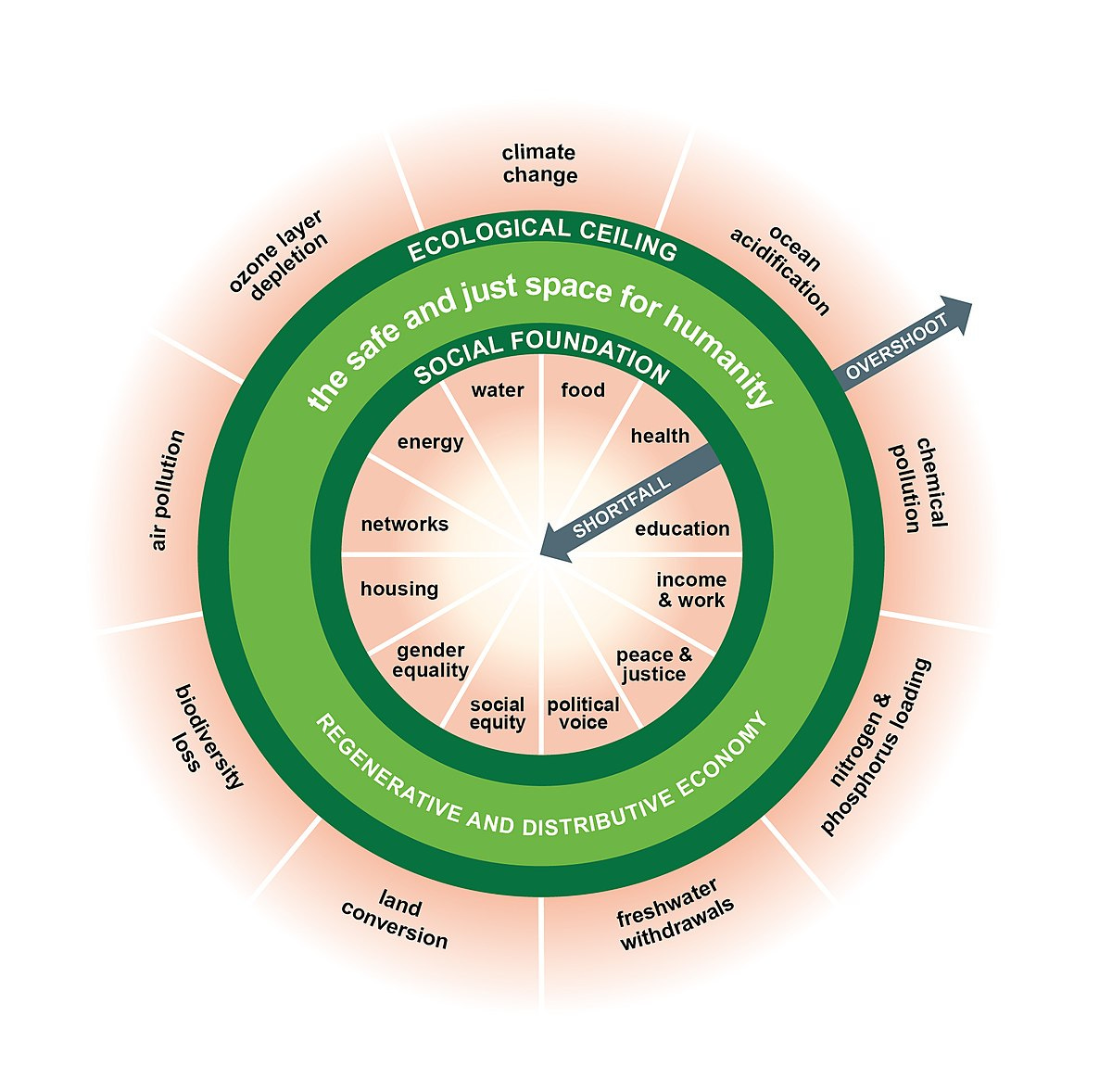
Its core concepts include:
- The doughnut-shaped economic model that promotes sustainability and social justice
- The social foundation, which guarantees access to basic human needs
- The ecological ceiling, which sets limits on resource consumption
- The circular flow of materials to reduce waste and pollution
- Regenerative design for ecosystems to enhance health and resilience
- Distributed ownership for equitable distribution of wealth and decision-making
- Interconnectedness that recognizes the complexity of economic systems
- Human well-being, which includes social and emotional fulfilment beyond material wealth.
Source: Doughnut Economics
Cathedral Thinking

Cathedral thinking is the idea that long-term projects require sustained effort and collaboration across generations, similar to the way mediaeval cathedrals were constructed over centuries. The concept emphasises the importance of setting ambitious goals and investing in the future, even if the results may not be realised in one’s lifetime.
Greta Thunberg has referred to it in her book No One Is Too Small to Make a Difference:
“Avoiding climate breakdown will require cathedral thinking. We must lay the foundation while we may not know exactly how to build the ceiling.”
Source: No One is Too Small to Make a Difference
Degrowth

Degrowth theory is a critique of the idea of economic growth and advocates for a transformation of economies to produce and consume less – and differently.
It argues that economic growth is no longer desirable and its costs exceed its benefits.
Infinite growth is not possible in a finite world.
The objective of Degrowth is to reframe humanity’s goals to address the climate crisis by dramatically scaling down aggregate energy and resource use to where it is in balance with the living world.
Blue Commons

Guy Standing presents a theory and framework for rescuing the economy of the sea in his book Blue Commons. He argues that the current system of rentier capitalism dominates the marine economy, based on privatisation, financial capital, and a drive for profit over sustainability.
To address this, Standing suggests that governments should abandon the “fetish” of endless economic growth and establish maritime nations that prioritise the common good. He calls for a new approach to oceanic governance that emphasises sustainability, community, and social justice.
What do you think?
- Which of the approaches resonates with you most?
- Do you know of any other theories, frameworks, or approaches to climate action?
- Do you believe there should be a varied approach from the local up to economy level?
Leave a Reply