

There are many approaches to taking action against climate change. Over our next two posts we will discuss 7 ways of thinking about how we tackle the crisis.
This is intended as a starting point for further exploration and discussion.
Environmental-centrism

David Pearce, known for his work in environmental economics and natural capital, suggests there exist two sets of economic values in relation to the natural world:
Anthropocentrism
Humans have ‘primary value’;
Everything else, including nature and the environment, have ‘instrumental value’ – it only has value under direct use by humans
Ecocentrism
Value in nature and the environment is ‘primary’, or intrinsic, and independent of humans
David Pearce has advocated the use of “weak anthropocentrism” – primary or intrinsic value is placed on land, sea and air through greater stewardship and/or representation via the framework, demonstrating its instrumental value.
The intention is to give Nature “a voice” that it may not otherwise have.
Source: CAB Direct
Mission Economy

Mariana Mazzucato believes we should adopt “missions” in order to address pressing issues in economies. Coordinating the public and private sectors to effectively collaborate would allow us to aim towards clear, long term goals and objectives.
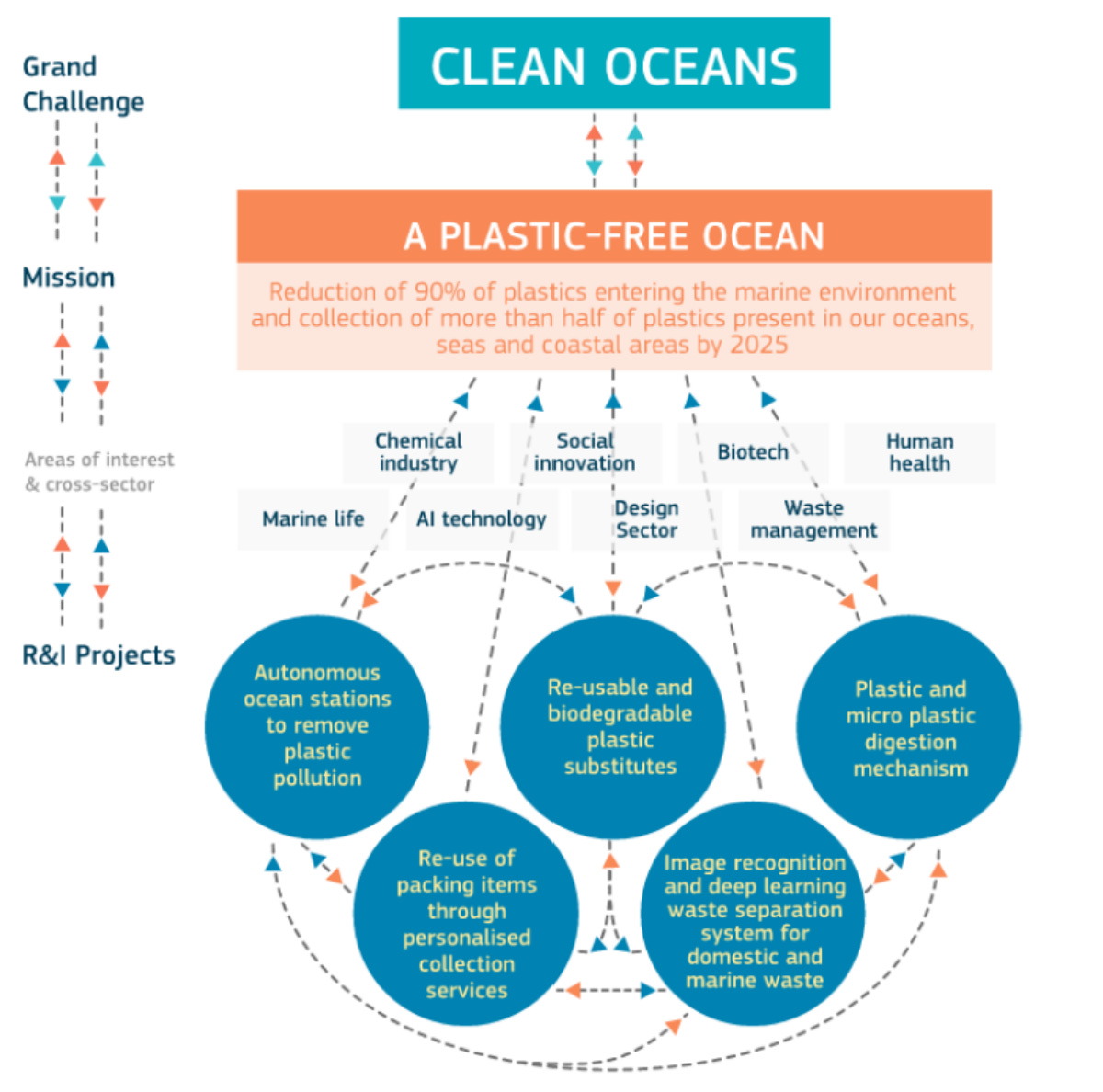
There are “seven key pillars” to guide a mission-oriented approach:
- A new approach to value and the collective process through which it is created
- Co-creation between public and private sectors and co-shaping of markets
- Re-orientation of orgs toward collaboration over competition
- Ensuring the economy works for society not the other way round
- Inclusive growth meaning more predistribution through collective ownership and recognition of value creation being a collective effort
- Symbiotic relationships – public and private in equal partnerships
- Improved participation through citizen assemblies, facilitation of debate, discussion and consensus building
Sources: Mission Economy, UCL
Governing the Commons

Elinor Ostrom is the first woman Nobel Prize recipient in Economic Sciences (2009)
She examined how communities can successfully manage shared resources without the need for government or market intervention. Ostrom’s theory emphasises the importance of collective action, trust, and communication in achieving sustainable and equitable resource management.
Communities can use a variety of strategies, including the establishment of property rights, to create rules and norms that incentivise responsible resource use
Rather than relying solely on market mechanisms or government regulation, communities can work collaboratively and effectively to manage shared resources
Source: Investopedia
What do you think?
- Which of the approaches resonates with you most?
- Do you know of any other theories, frameworks, or approaches to climate action?
- Do you believe there should be a varied approach from the local up to economy level?
More coming in Part 2 next week
Leave a Reply