
The current situation in the Republic of Ireland
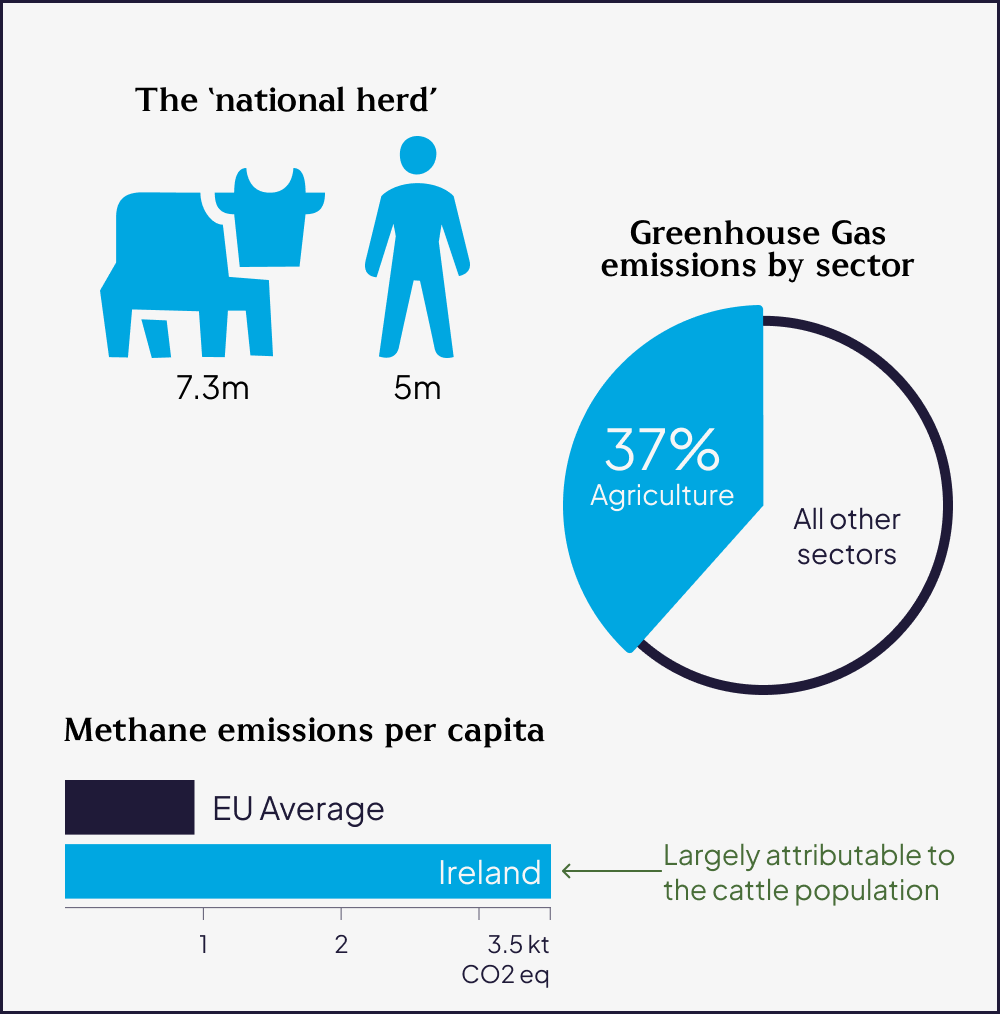
The concept of grass-fed cattle has been hailed as “climate-friendly”, with its ability to sequester carbon in the soil due to distinct feeding patterns.
However, a comprehensive study from Oxford University’s Food Climate Research Network reveals that grass-fed cattle emit more greenhouse gases than the soil can effectively absorb.
Within the Republic of Ireland’s commitment to climate goals, a dilemma emerges. Teagasc’s beef enterprise leader argues that reducing Irish beef exports to meet targets might inadvertently raise global greenhouse gas emissions through “carbon leakage.”
Carbon leakage occurs when emission cuts in one country are offset by increased production elsewhere – exemplified by regions like Brazil where illegal deforestation for cattle and soy production prevails.
Carbon leakage can only occur given continued demand for meat production, use of highly inefficient or destructive cattle raising practices, and special interest protectionism through marketing and unwillingness to adapt to alternative products.
Addressing this challenge requires industrial, social and cultural transformations. This evolution will be further explored in subsequent instalments of what we’re calling our Beef Trilogy.
Sources: EuroNews Green, Carbon Brief, Irish Times

Land and Feed
Grass-fed cattle also require significant land allocation for grazing. This can lead to effectively biodiversity deserts in rural areas, where grass primarily grows or is encouraged to grow, therefore outcompeting native plants.
In addition, cattle diets are often supplemented with grain or soy feeds. These feeds require significant land allocation and water also, which can often lead to deforestation at home and abroad.
Cattle raising is also an inefficient use of resources as the grain grown may offer greater nutritional value as a food itself, which is subsequently diluted through the food chain.
Sources: NPR, Greenpeace

Organic & Regenerative Beef Farming
Advocates for continued beef farming argue for use of organic or regenerative farming techniques, with grass- or pasture-fed beef being considered regenerative. Other methods include:
- Using seaweed as cattle feed has shown significant reductions in methane emissions. One study found that adding seaweed to a cow’s diet could reduce methane emissions by as much as 82 percent.
- Knepp Estate employs a method of free-ranging herds of cattle, ponies, pigs, and deer as part of their rewilding efforts. These animals are allowed to roam freely across the land, mimicking the natural grazing patterns of wild herbivores.

BUT…
George Monbiot, an influential environmental and political activist, argues that organic, pasture-fed beef and lamb are among the most damaging farm products, using significant land resources but contributing only 1% of the world’s protein.
Livestock grazing negatively impacts wildlife diversity and large predators. The current “regenerative grazing” trend often falls short of ecological restoration. Pasture-fed meat production is a major cause of agricultural sprawl, with substantial ecological and carbon opportunity costs.
Sources: University of California Davis, PLOS ONE, George Monbiot

Cultural & Social Implications
Agriculture has shaped Europe’s culture and landscape, but its shift to global industry demands increased food production amid urbanisation.
The EU’s common agricultural policy links food to economic security over societal welfare, and intensive practices harm biodiversity and the environment. A growing population necessitates sustainable food production, urging shifts to healthier diets including primarily plant-based over resource inefficient ones based on meat consumption and reduced food wastage. The same can be said for the United Kingdom including Northern Ireland.
[ai_shortcode ids=”299,300,301″]