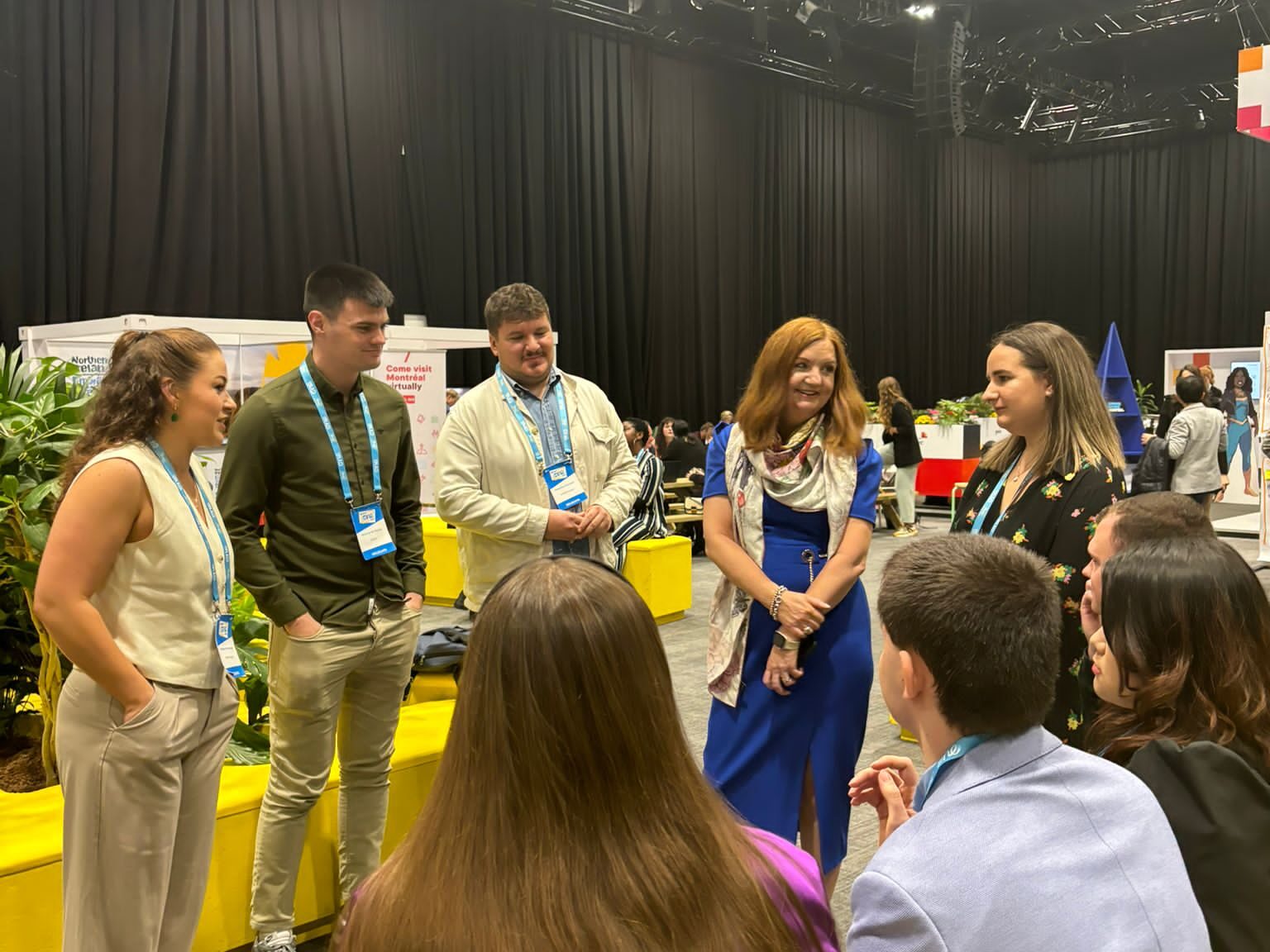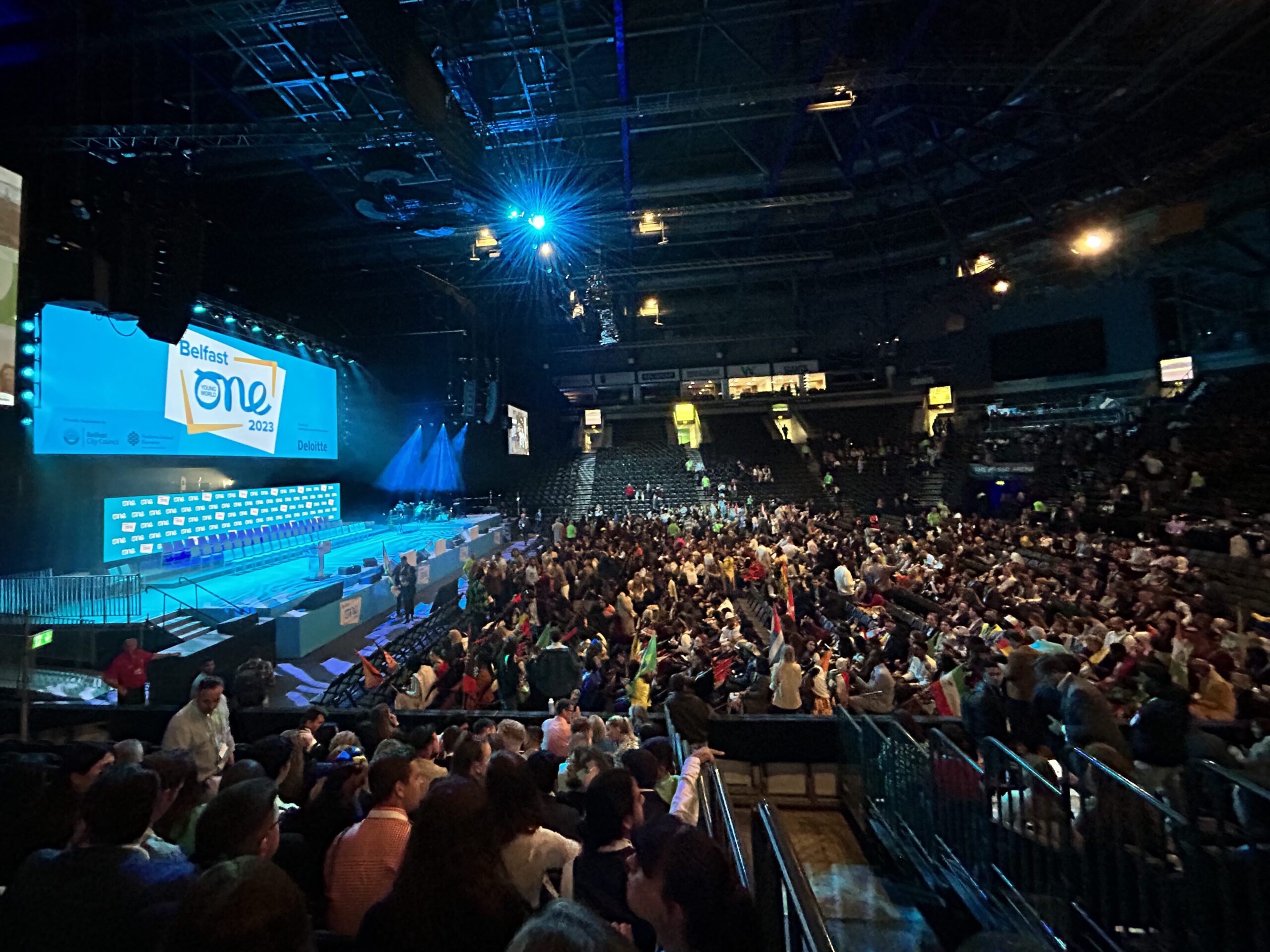
I am grateful to have had the opportunity to attend One Young World this year in Belfast. One Young World is a global community for young leaders providing them a global platform and network. One Young World holds an annual summit where young leaders from 190+ countries and 250+ organisations can debate and devise solutions regarding climate change, social justice, political reform, and other global issues.
This year’s plenary themes were the food crisis, education, climate emergency, mental health, and peace and reconciliation. The depth of discussion, interaction, and content would require countless posts to discuss it at any level of detail, so the following are highlights of some of the panels on the climate emergency.
Indigenous Youth Leaders on Sustainability & Climate Action
One of the initial panels included indigenous young leaders discussing what indigenous communities can teach us about sustainability including alternative ways to lead climate action. The following panel was facilitated by Ilya Calderon, a Colombian journalist and significant advocate for racial justice and included:
Mia Kami a Tongan high school teacher, indigenous rights activist and climate justice advocate. She spoke to the importance of intergenerational discussion including in the maintenance of indigenous knowledge and its passing down, and representation of indigenous voices who have solutions in addressing climate change.
Victor Lopez Carmen (Waokiya Mani in the Dakota language) of the Crow Creek Sioux and Yaqui tribes, and is co-chair of the United Nations Global Indigenous Youth Caucus. He highlighted the importance of taking responsibility for your actions and their repercussions, but also the bringing to life of our ancestors, to remember what they did for us.
Joanna Bernard, Interim National Chief of the Assembly of First Nations in Canada provided context to the Assembly of First Nations. Joanna spoke to the role of knowledge keepers in indigenous communities, particularly in the passing down of stories which are relevant to climate change due to many of these communities having existed for 1000s of years.
Winter Dawn Lipscombe, the Co-chair of the Assembly of First Nations National Youth Council and Economic Policy Analyst to the Crown Indigenous Relations and Northern Affairs in Canada. She addressed the underlying separation of nature and humans which drive destructive behaviours. Indigenous peoples instead place nature central to governance and practice, therefore considering the collective.
One key takeaway from the panel was when Mia Kami made a call to action in the acknowledgement of responsibility by saying: “We can all feel some sort of responsibility to the planet…it’s really important we make an effort to recognise our responsibility.”

Climate Refugees
Jacky Rowland, Renowned Foreign Correspondent, introduced a spotlight session on supporting climate refugees and asking the question of what can we do to prepare for it. Jacky spoke to the climate emergency leading to the potential movement of more than 200 million people.
Kat Graham, Actress and Goodwill Ambassador for UNHCR, addressed the stigma of refugees, saying instead that refugees want to be part of their new communities, they want to contribute and seek support in doing so saying “No one chooses to be a refugee.” and refugees don’t “…want a hand out, just a hand up.”
Gillian Triggs, Former President of the Australian Human Rights Commission, Assistant Secretary General of UNCHR, offered an example of what a climate refugee is by discussing Lake Chad which is drying up leading to increasing tensions in the region and people being displaced as their life is no longer sustainable. There are also those refugees who are partially impacted by climate change, where impacts are slower onset over years.
Gillian went on to make a point by asking the question of “Is the system fit for purpose?” is dangerous as it might suggest that the system is not working. Instead we may need a new protocol to aid climate refugees, however, taking care in its development given global populist rhetoric.
Rez Gardi, International Human Rights Lawyer, said “If we had listened to the way of life and the way of connection and love which people should have with the environment and land, we wouldn’t be in this situation talking about some of these issues with climate change in the first place.” in reference to indigenous peoples and their approach to nature and culture.
Further, in relation to climate refugees, Rez said understanding there is an unprecedented number of people around the world, with as many as 1 billion facing displacement, makes clear that the mechanisms needed to facilitate effective relocation, care and support are not in place. Rez went on to highlight that mental health is not a luxury, but something that should be made a key consideration in helping forcibly displaced people and refugees.
Highlights from the Plenary Challenge on the Climate Emergency
Joanna Bernard, Interim National Chief of the Assembly of First Nations introduced Gereltuya Bayanmunkh, Co-Founder of Green Dot in Mongolia. Gereltuya provided an example of how climate change is leading to displacement of peoples in Mongolia, but also calling attention to the destruction and loss of ways of life, specifically the nomadic culture of Mongolia.
Gereltuya co-founded Green Dot to inform Mongolian youth about the impacts of climate change whilst aiming to empower them to take climate action. They have logged 1000s of actions to date, with a target of 1 million actions in future. Gereltuya spoke to the importance of remembering people’s stories including that of her family and loss of their nomadic lifestyle, as well as all of us needing to take these individual actions so collectively we can combat climate change.
Per Heggenes, CEO of the IKEA Foundation, introduced Isabel Pulido, CEO & Co-Founder of Nanofreeze. Isabel addressed the impact of refrigeration which globally produces as much as 10% of greenhouse gas emissions. To address this impact but also the lack of refrigeration in many communities, for example, in rural Colombia (her country). Isabel and her team discovered a bacteria that could aid in this challenge, founding Nanofreeze.
Nanofreeze’s innovative technology uses proteins to create ice that lasts twice as long and forms at higher temperatures. This advancement is significant for efficient cold storage, which Isabel pointed out, is especially important for vaccine distribution in warmer climates. Nanofreeze underscores the untapped solutions awaiting discovery and their significance in tackling and adapting to climate change.
This panel provided inspiration in the development of solutions but also reinforced the need for collective action through coordination and collaboration. Climate organisations should seek to engage one another in support of our common goals.
UNICEF Youth Advocacy Guide
Finally, I had the pleasure of attending a UNICEF and AstraZeneca taster session on their Youth Advocacy Guide. Their guide is extensive, intended to be open source and adaptable to many advocacy use cases. The guide is designed to be applicable to all causes whilst allowing the user to plug in relevant aspects as required including, for example, relatable case studies. The guide can be found here and I would highly recommend everyone to explore it in consideration of advocating for something of benefit to your communities and organisations.
Closing Thoughts
Attending One Young World was an inspiring experience motivating me to do more but also look to our global community for support and collaboration, actively becoming an actively listening citizen and contributor. If you would like to learn more about One Young World, any of the topics and panels discussed here, or want to partner/collaborate with Climate Ireland, feel free to connect with me here.
– Maurizio